
Microsurgery in Lucerne
Working under an operating microscope, our team in Lucerne performs highly precise, extremely tissue-sparing procedures. Apicectomies, mucogingival procedures and plastic-periodontal surgery succeed with the smallest of incisions.
Microsurgery in Lucerne – Precise and Tissue-Sparing
The result in Lucerne: less swelling, less pain, faster healing and excellent aesthetic results even for demanding surgical cases.
- Surgery under a microscope for maximum precision
- Minimal incisions and faster healing
- Apicectomy with a high success rate
- Plastic-periodontal procedures (recession coverage)
What is dental microsurgery?
Compared with conventional surgery, microsurgery in dentistry offers better visibility, greater precision and gentler treatment options. This allows smaller access to the surgical area, leading to faster healing, less swelling after the procedure and less discomfort.
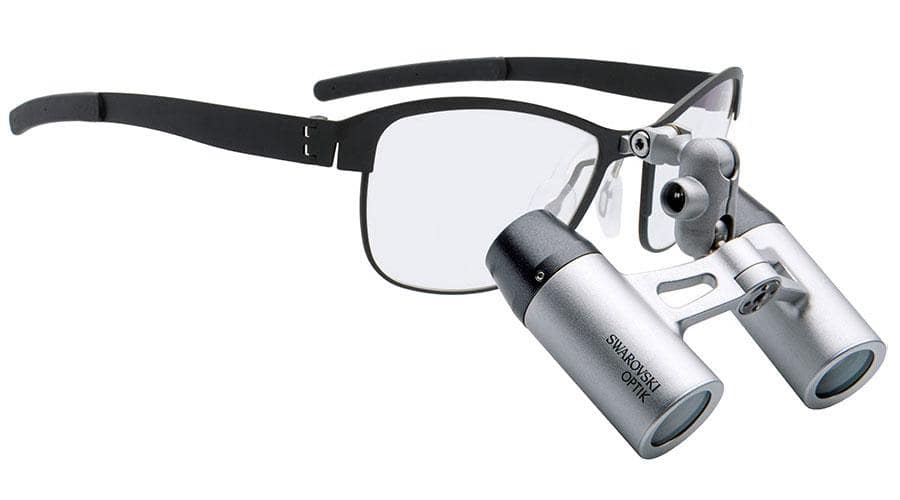
Depending on the type of procedure, we work with 6× to 24× magnification – using loupes or an operating microscope. For wound closure we use micro-sutures that can barely be seen with the naked eye.
Where microsurgery is used
We use microsurgical techniques wherever precise, tissue-sparing work is needed in a confined space.
Apicoectomy
If inflammation at the root tip persists despite root canal treatment, the root tip is removed under the operating microscope and the root canal is sealed from below. Find out more under microscopic endodontics.
Recession coverage
Where the gums have receded, exposed tooth necks can be covered with tissue again in plastic-periodontal procedures. Fine incisions and sutures are important for an aesthetic result. See also periodontology.
Mucogingival procedures
Procedures on the gums and oral mucosa, for example to widen the attached gingiva, can be carried out particularly gently under magnification.
Implant surgery
Magnification and micro-instruments also help when placing dental implants and managing the soft tissue around them. In addition, the implant position can be planned digitally with guided surgery.
How a microsurgical procedure works
- 1Examination and planningWe examine the affected area and use X-rays, and where needed 3D X-ray diagnostics, to plan the procedure.
- 2Local anaesthesiaThe procedure is carried out under local anaesthesia. If you are anxious, we can discuss additional options such as nitrous oxide sedation.
- 3Procedure under magnificationUsing loupes or an operating microscope and fine micro-instruments, we work through the smallest possible access.
- 4Wound closureThe wound is closed with micro-sutures that bring the tissue together precisely and are barely visible.
- 5Follow-upAt a follow-up appointment we check the healing and remove the sutures if necessary.
Advantages of microsurgery
- Better visibility and greater precision thanks to 6× to 24× magnification.
- Smaller access to the surgical area and less tissue trauma.
- Faster healing and less swelling after the procedure.
- Less discomfort for patients.
- Fine micro-sutures for barely visible wound closure – important in visible areas.
Frequently asked questions about microsurgery
Answers on magnification, pain, healing and areas of use.
How does microsurgery differ from conventional dental surgery?
In microsurgery we work under 6× to 24× magnification with loupes or an operating microscope and with fine micro-instruments. This allows smaller incisions, protects the tissue, and the wound is closed with micro-sutures. As a rule, this leads to faster healing and less swelling.
Is a microsurgical procedure painful?
Thanks to local anaesthesia you usually feel no pain during the procedure. Because smaller incisions are sufficient, swelling and discomfort afterwards are usually less than after conventional procedures. Mild discomfort in the first few days can generally be managed well with painkillers.
When is an apicoectomy necessary?
An apicoectomy is considered when inflammation persists at the root tip of a tooth that has already had root canal treatment, and repeat root canal treatment is not sufficient or not possible. Under the operating microscope the root tip is removed and the canal sealed in order to save the tooth.
What should I do after the procedure?
Cool your cheek for the first few hours, avoid smoking, alcohol and hot drinks on the first day, and brush the treated area gently. Only eat once the anaesthesia has worn off. After the procedure you receive individual instructions and a follow-up appointment.
Where does LifeDent offer microsurgery?
We offer microsurgical procedures at our practices in Lucerne and Volketswil. If you have acute pain or swelling, help is available under dental emergency. You can request a consultation online.


