
Microscopic Endodontics in Lucerne
With a modern dental microscope, our team in Lucerne can reliably find, clean and tightly seal even the finest root canals – often saving teeth that once would have had to be extracted.
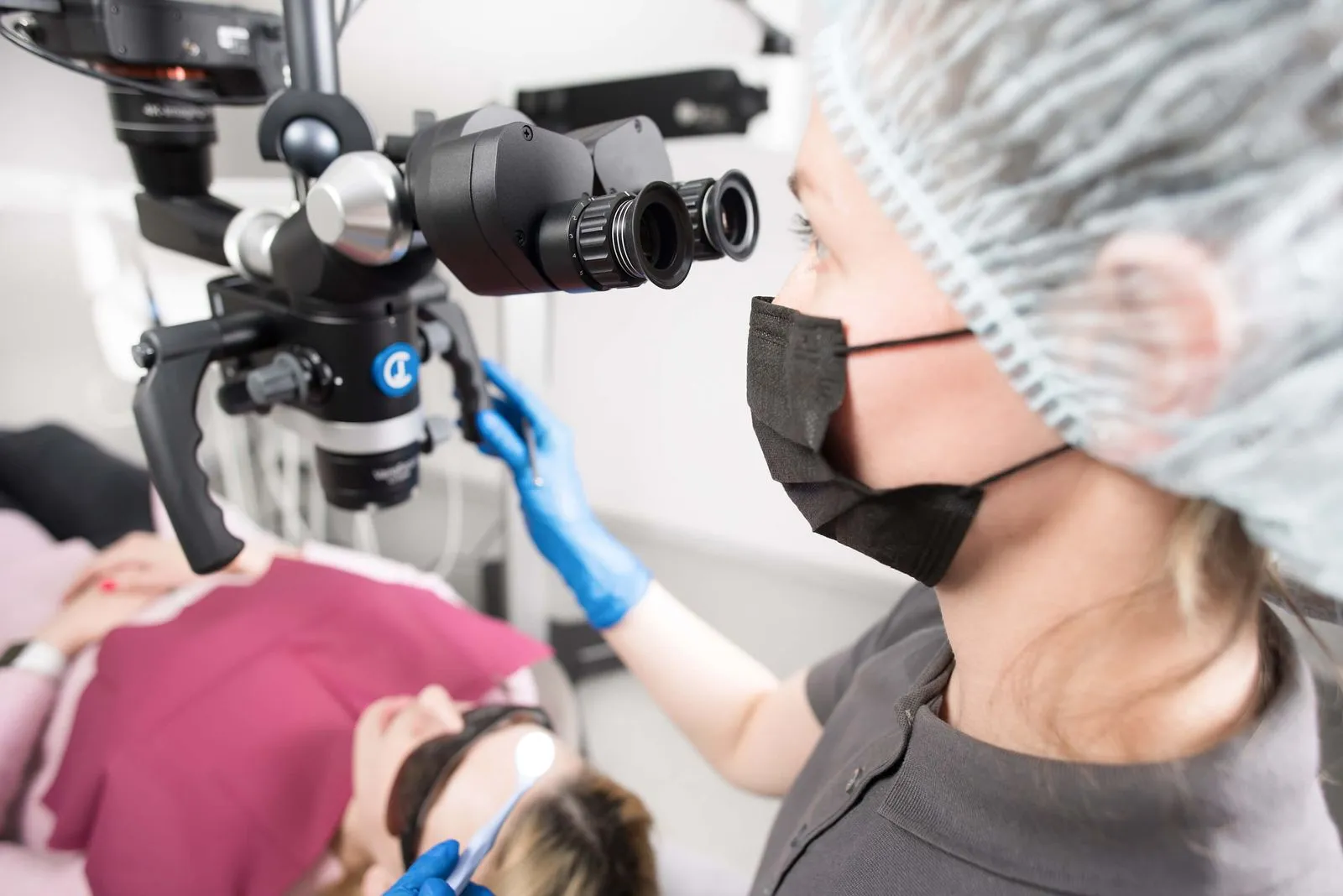
Microscopic Root Canal Treatment in Lucerne
Microscopic endodontics is precise, gentle and usually painless. In Lucerne we use mechanical preparation, ultrasound and biocompatible root-filling materials.
- Root canal treatment under the dental microscope
- Mechanical canal preparation for maximum precision
- Revision of previously failed root canal treatments
- Tooth preservation instead of extraction
What is microscopic endodontics?
Microscopic endodontics means using an operating microscope for endodontic treatments such as root canal treatment. The technique allows the dentist to work more precisely and to detect and treat the smallest details in the root canal system. Using an operating microscope is the foundation of successful treatment.
Treatments like these belong in the hands of specialists. We use biocompatible materials and modern equipment. 3D imaging is one of the most important pillars of successful endodontics in complex cases.
When does root canal treatment under the microscope make sense?
The microscope is used mainly in complex cases, for example:
- Additional or hard-to-find root canals
- Severely curved or narrowed canals
- Retreatment of a tooth that has already had a root canal treatment
- Removal of old root fillings or broken instruments
- Suspected fine cracks in the tooth
- Apicoectomies (root-end surgery)
How microscopic root canal treatment works
- 1DiagnosisA clinical examination and X-rays, plus a 3D scan (CBCT) in complex cases, show the number, shape and course of the root canals and the extent of the inflammation.
- 2Anaesthesia and isolationThe tooth is numbed locally and isolated from the rest of the mouth with a rubber dam so that no bacteria from saliva enter the canals.
- 3Shaping under the microscopeUnder high magnification, all canal openings are located and the canals are cleaned and widened with fine instruments.
- 4Disinfection and root fillingRinses disinfect the canal system. The canals are then filled bacteria-tight with a biocompatible material.
- 5SealingThe tooth is sealed and, if necessary, later stabilised with a crown.
Microsurgical apicoectomy
If inflammation at the root tip does not heal despite root canal treatment, an apicoectomy can save the tooth. The inflamed root tip is removed through a small opening in the gum, and the root canal is sealed from below.
The operating microscope is used here as well. Without this optical magnification of up to 24×, apicoectomies should not be performed. Read more about fine surgical procedures under microsurgery.
Benefits of microscopic endodontics
- Better visibility and magnification for more precise treatment
- Better detection of fine root canal openings and anomalies
- Lower risk of complications
- Higher success rates for root canal treatment
- Gentler treatment of the surrounding tissue
- Ability to carry out complex endodontic procedures
Frequently asked questions about microscopic root canal treatment
Answers on differences, indications, pain, costs and locations.
How does it differ from conventional root canal treatment?
The procedure is similar, but under the operating microscope the dentist works with high magnification and illumination. This reveals fine or additional canals, curvatures and cracks that are easily missed with the naked eye or magnifying loupes. It increases precision, especially in complex cases.
When is root canal treatment under the microscope needed?
Mainly in complex cases: canals that are hard to find, curved or narrowed, retreatment of a tooth that has already had a root canal treatment, and apicoectomies. We determine during the examination whether the microscope is needed. General information is available under root canal treatment.
Can a tooth that has already had a root canal be saved?
Often, yes. If a root-treated tooth becomes inflamed again, the old root filling can be removed and the canal system cleaned and sealed again under the microscope (retreatment). If this does not succeed, an apicoectomy is a further option before the tooth has to be removed.
Is microscopic root canal treatment painful?
No, the treatment is carried out under local anaesthetic and is therefore usually painless. The tooth may be slightly sensitive to pressure for the first few days afterwards. If you are anxious about the treatment, please tell us – read more under treatment for anxious patients.
How much does root canal treatment under the microscope cost?
The cost depends on the number and complexity of the root canals and on whether it is a first treatment or a retreatment. You receive a cost estimate after the diagnosis. Basic health insurance in Switzerland generally does not cover dental treatment.
Where does LifeDent offer microscopic root canal treatment?
At our practices in Lucerne and Volketswil. You can request an appointment online for an assessment; please feel free to bring any existing X-rays with you. During the examination we determine whether the microscope is needed for your tooth.


