
Ceramic vs. Titanium Implants in Lucerne
Ceramic implants made of zirconium dioxide are a modern, metal-free alternative to titanium implants. At our practice in Lucerne we advise you in detail on when ceramic makes sense.
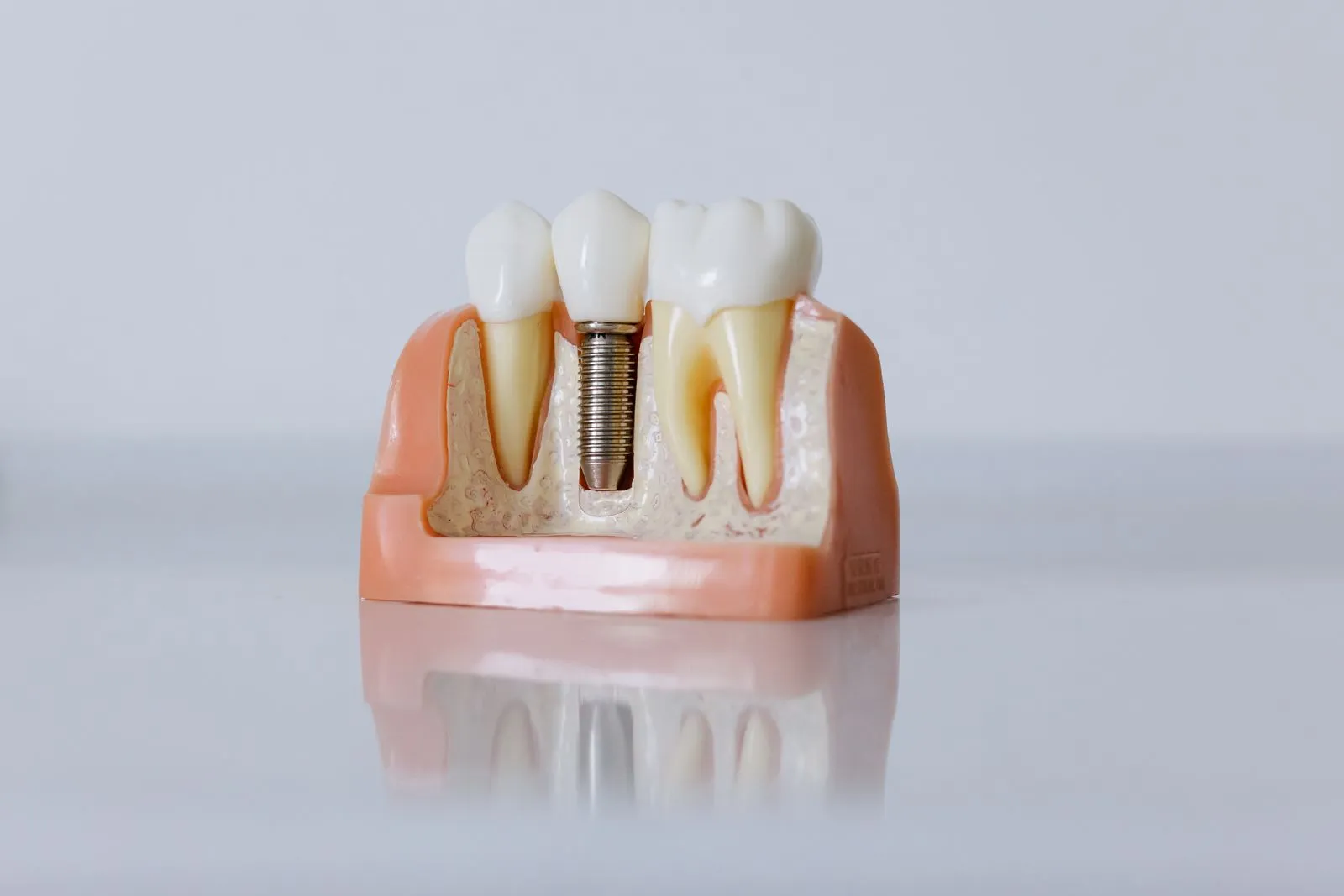
Ceramic Implants in Lucerne – Metal-Free and Biocompatible
Especially in visible aesthetic areas and for patients with metal intolerance, ceramic implants in Lucerne are an excellent solution – biocompatible, plaque-resistant and with a natural tooth colour.
- Metal-free and highly biocompatible
- Natural tooth-coloured appearance, even at the gum line
- Plaque-resistant surface
- Ideal for aesthetically demanding areas
Ceramic or titanium?
Over the past fifty years, light and stable titanium implants have closed countless gaps and replaced diseased teeth. Titanium remains a proven standard today. Some patients, however, prefer a metal-free solution – for example because of a metal intolerance, for aesthetic reasons with thin gums, or out of personal conviction. For them, ceramic implants are now a genuine alternative.
Ceramic implants made of zirconium dioxide integrate reliably into bone and gums, are tooth-coloured and attract comparatively little plaque. Whether a ceramic or a titanium implant suits you better depends on your individual situation – we discuss this together in a personal consultation. For the basics of the procedure, healing and alternatives, see dental implants and oral surgery.
Ceramic and titanium implants compared
The main differences at a glance. Which material suits your case is something we clarify in the consultation.
| Feature | Ceramic implant | Titanium implant |
|---|---|---|
| Material | Zirconium dioxide (ceramic) | Titanium (metal) |
| Colour | Tooth-coloured | Metallic grey |
| Metal-free | Yes; the Patent™ system completely, including the abutment | No |
| Proven for | A more recent alternative | Around fifty years |
| Success rates | Comparable to titanium | Proven standard |
| Plaque accumulation | Comparatively low | Higher than zirconium dioxide |
| With metal intolerance | Suitable | Not the first choice |
Advantages of ceramic implants
What sets ceramic implants apart from titanium implants:
- The success rates of ceramic and titanium implants are comparable – ceramic implants, however, are often completely metal-free.
- The soft-tissue response is superior to that of titanium implants.
- No corrosion and little plaque accumulation.
- Metal-free – an option for patients with a metal intolerance.
- Good bio-integration with soft tissue and bone.
Why Patent™ implants?
We use Patent™, the two-piece ceramic implant system made by Zircon Medical.
Scientifically studied
Patent™ is a two-piece ceramic implant system whose results have been examined in long-term scientific studies. According to the manufacturer, these studies show success rates comparable to titanium implants and low peri-implantitis rates over up to ten years of wear. The manufacturer states that more than 10,000 Patent™ implants have been placed worldwide.
Completely metal-free
Many two-piece ceramic implants contain metal screws in their internal connection and are therefore not completely metal-free. The Patent™ system consists of the implant itself and a cemented fibreglass post as the abutment, making it entirely metal-free. Because the abutment is bonded rather than screwed, there is no micro-gap at the connection in which bacteria could settle.
Reliable healing
With Patent™ implants a patented manufacturing process creates an implant surface that is significantly rougher than most other implant surfaces. According to the manufacturer, Patent™ implants therefore achieve faster and more reliable bone healing than most other implant systems and are suitable for immediate loading.
Healthy gums
The design of the Patent™ system is «biomimetic», meaning it is modelled on a natural tooth. This allows a tight soft-tissue seal to form around the implant, making it harder for bacteria to penetrate. In addition, zirconium dioxide attracts comparatively little plaque, which can reduce the risk of peri-implantitis.
Which implant suits you?
The decision depends on several factors: your individual needs, aesthetic preferences, possible allergies and the condition of your bone and gums. Before implant placement we examine your teeth, gums and jawbone, using 3D X-ray diagnostics where needed. These images also allow the implant position to be planned digitally and transferred with a surgical guide – see guided surgery.
If a restoration that is as metal-free as possible matters to you, you will find more information under biological dentistry. For an implant to stay healthy in the long term, thorough oral hygiene and regular dental hygiene appointments are essential – with ceramic just as with titanium.
Frequently asked questions about ceramic implants
Answers on material, tolerability, durability and costs.
Which is better: a ceramic or a titanium implant?
Neither material is better in principle; the success rates are comparable. Titanium has been proven for around fifty years. Ceramic is metal-free, tooth-coloured and attracts little plaque – an advantage with a metal intolerance or thin gums in the visible area. We clarify which implant suits you in the consultation.
Are ceramic implants completely metal-free?
Not all of them. Many two-piece ceramic implants contain a metal screw in the internal connection. The Patent™ system we use, by contrast, is completely metal-free: the abutment is a fibreglass post that is bonded rather than screwed. This also means there is no micro-gap at the connection.
Who are ceramic implants suitable for?
Ceramic implants suit patients with a metal intolerance, visible areas with thin gums, and anyone who prefers a metal-free solution out of conviction. As with any implant, the mouth must be free of inflammation and there must be enough jawbone, which we examine beforehand.
How long does a ceramic implant last?
For the Patent™ system, the manufacturer cites long-term studies over up to ten years, with success rates comparable to titanium implants and low peri-implantitis rates. How long an individual implant lasts depends largely on oral hygiene, regular check-ups and general health.
How much does a ceramic implant cost?
The cost depends on the number of implants, any preliminary treatment such as bone grafting, and the type of crown. After the examination you receive a cost estimate. Basic Swiss health insurance generally does not cover dental treatment; check with your supplementary insurance.
Where does LifeDent offer ceramic implants?
We place ceramic implants at our practices in Lucerne and Volketswil. If you are anxious about the procedure, we can discuss options such as nitrous oxide sedation. You can request a consultation online.


