
Dental Prosthetics (Fixed & Removable) in Neunkirch
High-quality dental prosthetics – fixed and removable – for function, comfort and a natural smile.
Dental Prosthetics
Teeth are important for chewing function, speech and natural appearance. Well-functioning and beautiful teeth influence well-being. In the field of dental prosthetics, we deal with the restoration of the dentition when individual, several or all teeth are lost. Dental diseases such as periodontitis and cavities, accidents or teeth grinding can be reasons why you opt for dental prosthetics. Missing teeth limit quality of life and reduce self-esteem.
Our goal is, in harmony with the individual needs of the patient, to preserve the remaining tooth substance and bone as best as possible in order to restore the function and appearance of the teeth. In detailed consultations, we work together with you using numerous examples to develop your individual treatment goals and explain the different treatment options and prosthetic materials.
What is a dental bridge and when is it used?
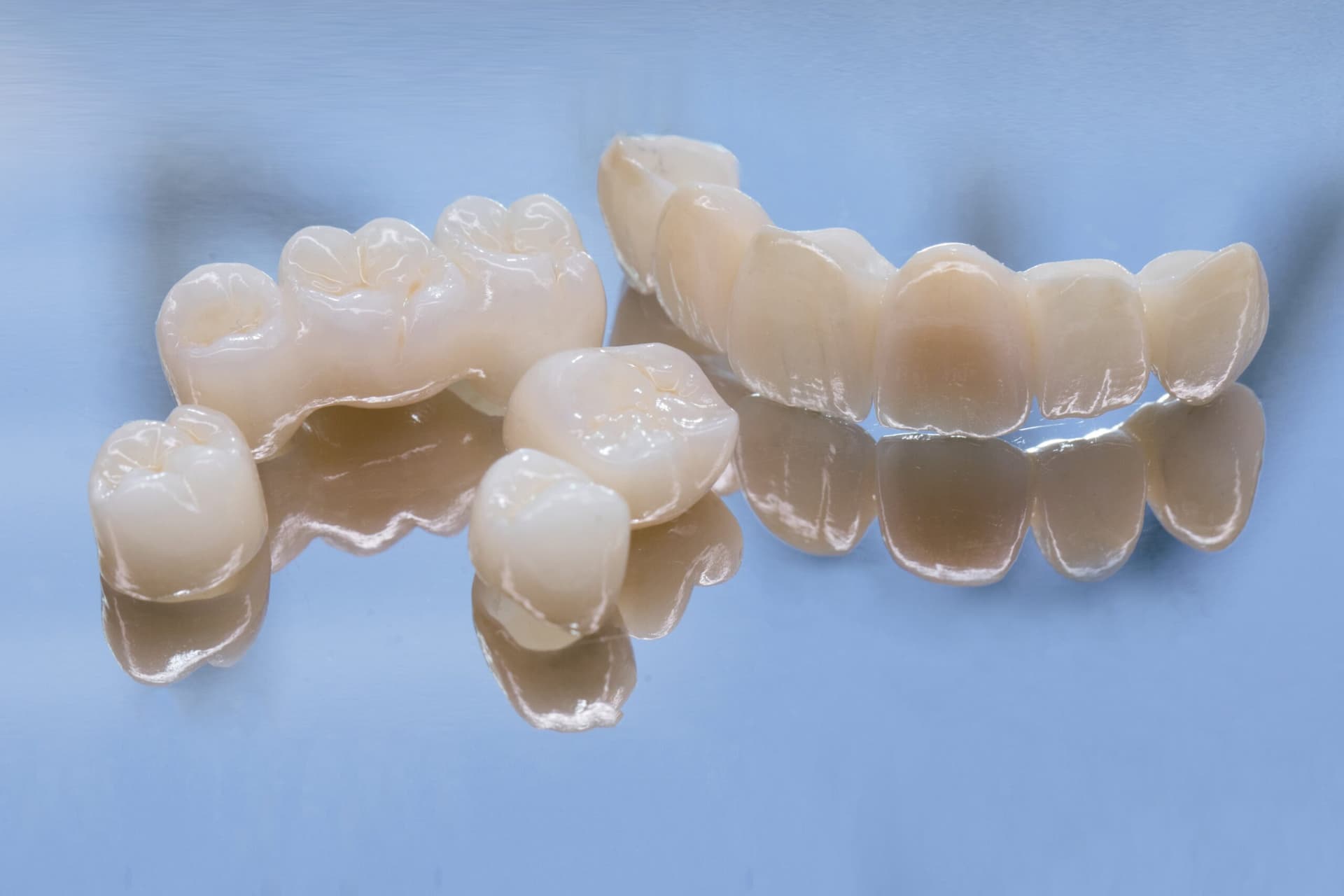
A dental bridge is a dental prosthesis that serves to close gaps in the dentition. Unlike removable dentures, a dental bridge is firmly fixed in the mouth. It is typically placed between two crowned teeth that serve as abutments. These crowned teeth provide a stable base for the bridge. It can be a great solution to improve the appearance of your smile, as it closes the visible gaps while restoring normal chewing function.
What is a crown and when is it used?
Think of a dental crown as a kind of protective shell specially made to cover a damaged tooth. When a tooth has been severely damaged by cavities or after an accident, a crown can be placed. The crown is placed over the tooth, restoring the natural appearance and full function of the tooth. In some cases, crowns also serve as part of a bridge to replace missing teeth and close larger gaps.
What are the advantages of dental bridges?
Long durability
Dental bridges are known for their longevity. With good care, they can last between 10 and 20 years, which is a considerable time span compared to other dental prosthetic options.
Fixed anchoring in the dentition
Unlike removable dentures, dental bridges sit firmly in the mouth. This provides a more stable solution and allows a more natural feeling when speaking and eating.
No surgery required
Placing a dental bridge usually does not require surgical procedures. This makes the process less invasive than, for example, placing implants.
Restoration of aesthetics and function
Dental bridges not only restore the external appearance but also the functional integrity of the dental apparatus. This significantly improves the patient's chewing and speaking.
What are the advantages of crowns?
Tooth preservation: When a tooth is severely damaged, a crown can effectively save it. The crown encloses the tooth and protects it from further damage or cavities.
Functional restoration: A dental crown may not replace the entire tooth, but it stabilizes the remaining part so that it does not shift and can continue to withstand strong loads. This means that the natural chewing function of the tooth is restored, which is essential for a pleasant eating experience.
Durability and robustness: Especially in the area of molars, where the load is high, dental crowns show remarkable stability. With proper care, they can last a very long time; many metal-ceramic crowns are still in excellent condition after more than 20 years.
Aesthetic result: Ceramic crowns, especially in the area of front and canine teeth, offer excellent aesthetic quality. They match the color of the natural tooth and are barely distinguishable from it. This makes them ideal for the visible area of the dentition, where natural aesthetics are particularly important.
What requirements must be met for a dental bridge?
For a dental bridge to be placed, the following requirements must be met. First and foremost, an inflammation-free mouth, which means that your gums, teeth and jawbone are thoroughly examined and treated if necessary. The stability of the bridge depends heavily on your abutment teeth. If these teeth are not suitable due to disease, misalignment or weakness, you should consider alternative options such as implant-supported crowns or removable dentures. It is also advisable to replace any amalgam fillings in the abutment teeth with non-metallic alternatives to create optimal conditions for the bridge.
What requirements does a crown need?
To successfully crown a tooth, certain requirements must be met to ensure a long-term solution. First, the gums around the affected tooth should be healthy. Second, the tooth root should show no signs of inflammation, as this could affect the stability of the crown. Third, the tooth root must be firmly anchored in the jawbone to ensure that the crown sits stably and supports normal tooth function. When these conditions are met, the tooth is generally a suitable candidate for a crown.
How does the dental bridge treatment work?
If you decide on a dental bridge, the process proceeds in several steps:
First appointment
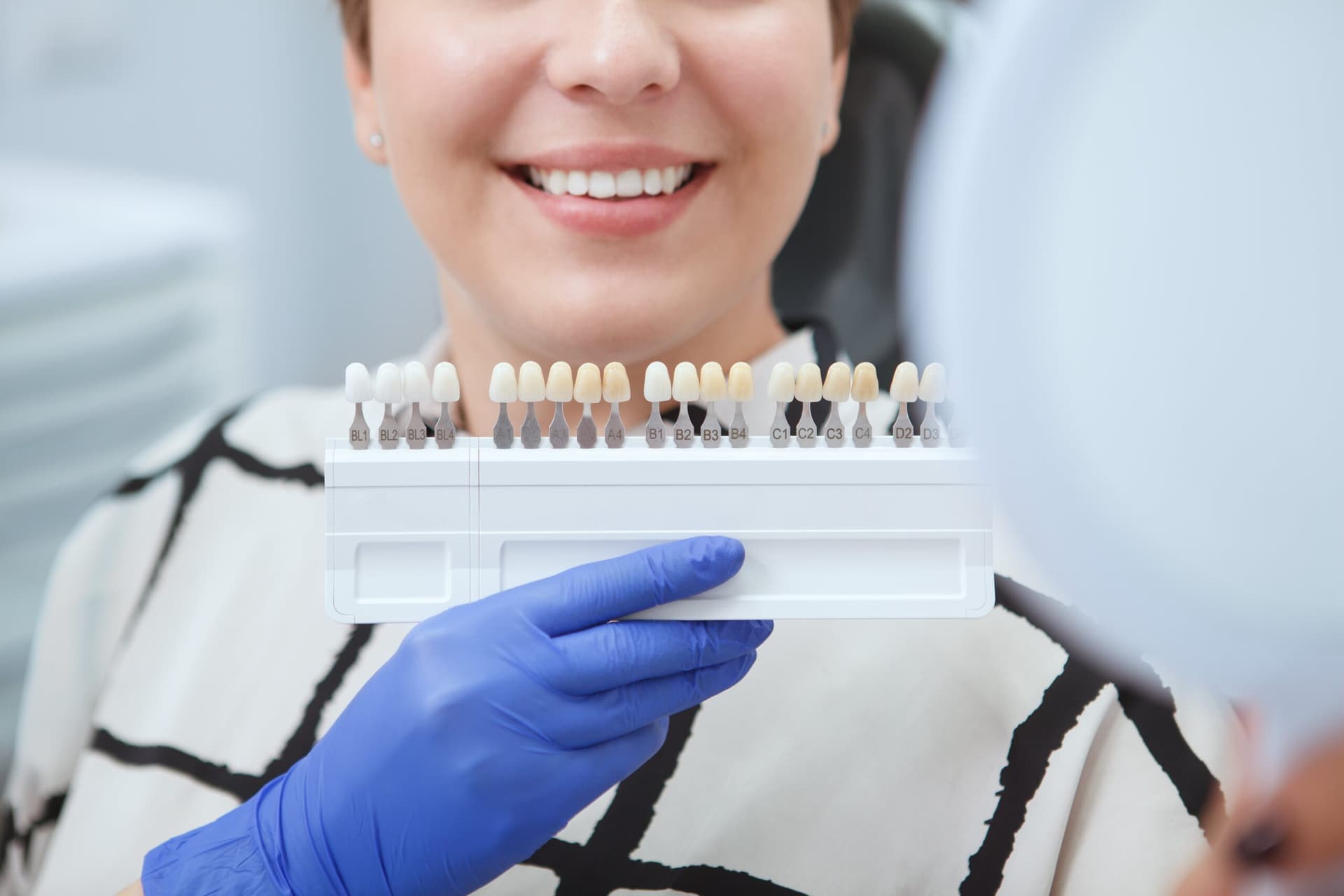
First, at one of our Lifedent practices in Neunkirch, we prepare your adjacent teeth that serve as supports for the bridge. These are carefully ground down, similar to a crown. If necessary, cavities are removed and the teeth are reinforced. Impressions are taken and the tooth color is determined to make the bridge look natural. Until the next appointment, you receive a temporary prosthesis.
Second appointment
At the next visit, you try the bridge for the first time. We check whether it fits exactly and is comfortable. The bridge is coated with an aesthetic ceramic layer to complete it. For larger bridges, another fitting may be necessary to guarantee a perfect fit.
Third appointment
The finished bridge is placed and permanently bonded. The bridges must not cause any tension and should fit harmoniously into your dentition.
How does the dental crown treatment work?
If you are thinking about whether a dental crown is the right option for you, I would like to give you an overview of the typical treatment process.
Initial consultation
Everything begins with a thorough consultation at one of our Lifedent practices in Neunkirch. Your mouth is comprehensively examined, if necessary an X-ray is taken to more accurately assess the condition of the affected tooth. Your dentist checks whether the dental nerve is healthy and whether there is enough tooth substance to support the crown.
Tooth preparation
In the next step, your tooth is prepared for the dental crown. Damaged tooth material is removed and the tooth is ground down accordingly. An impression of your prepared tooth is taken to produce your individual crown. While the final crown is being made, you receive a temporary tooth protection.
Fitting and attachment
The temporary is removed, the tooth is cleaned and the new crown is fitted. Your dentist checks the fit and bite precisely, makes necessary adjustments and finally fixes the crown with a special adhesive.
Aftercare
Finally, a follow-up appointment is arranged to check how you feel with the new crown and whether everything is going optimally.
What does a dental bridge consist of?
A dental bridge consists of two important parts: the bridge body and the bridge members. The number of bridge members depends on how many teeth are missing and need to be bridged. These bridge members can be made from different materials. Some consist of precious metals that are then coated with ceramic, while others are made entirely of ceramic. There are various options depending on individual needs and preferences.
What does a dental crown consist of?
There are different materials from which dental crowns can be made. Metal crowns and veneered crowns are two common options. Metal crowns consist of a metal framework coated with a thin layer of ceramic. These are usually attached to the damaged tooth with a special medical cement. Veneered crowns are similar but have a more aesthetic ceramic outer layer. Pure ceramic crowns are often attached with a special plastic adhesive to ensure secure fixation. The choice of material depends on individual needs and aesthetic preferences.
What types of dental bridges are there?
Base bridge
This bridge sits on the alveolar ridge and is a classic choice for closing tooth gaps.
Cantilever bridge
Unlike the base bridge, the pontic of this bridge does not directly touch the jaw. It is ideal for the back of the mouth where it is not visible.
Free-end bridge
When there is no further tooth on one side of the gap, this bridge is used. It is perfect for smaller gaps.
Composite or hybrid bridge
This bridge combines different materials or attachment methods, such as the combination of a natural tooth and an implant as abutments.
Adhesive or Maryland bridge
This bridge is gently attached by being glued to the adjacent teeth. Particularly well suited for younger people.
Inlay bridge
Here, inlays are used to attach the bridge to the adjacent teeth instead of crowns.
Removable bridge
This bridge can be removed and cleaned by the patient, similar to removable dentures, but offers additional comfort.
Telescopic bridge
With telescopic crowns consisting of inner and outer layers, this bridge is well suited for removable dental prosthetics.
Adhesive bridge
This bridge is attached to the inner sides of the adjacent teeth using a special bonding technique.
What disadvantages can dental bridges have?
Disadvantages of dental crowns
How much does a dental bridge/crown cost?
In Switzerland, the costs for crowns and dental bridges can vary depending on various factors such as the type of material, the complexity of the procedure, etc. In general, crowns can cost between 800 and 2,000 CHF. For dental bridges, prices can range between 1,500 and 4,000 CHF. However, it is important to note that these are only rough figures and the actual costs are individual. It is advisable to consult directly at one of our Lifedent practices in Neunkirch to get an accurate estimate of the costs for your specific situation.
How long does a bridge/dental crown last?
The lifespan of crowns and bridges is an important factor that many consider when choosing their dental prosthetics. Good care can help them last longer. Crowns, especially those made of full cast, can normally last between 15 and 25 years. The quality of materials, precision of fit and your daily dental care influence durability. Dental bridges can also last about 15 years with proper placement and care. Your personal oral hygiene plays an important role. Regular visits to one of our Lifedent dental practices in Neunkirch are crucial to optimally care for your dental prosthetics and detect problems early.


Give your smile the attention it deserves!
Book your appointment easily online. Trust in state-of-the-art technology, dedicated professionals and personal care.
Book appointment in Neunkirch